
A good afternoon of nature crafting usually begins with cold hands and a bag full of treasure. The trick is knowing which treasure to bring home. Britain has dozens of native trees, plus plenty of naturalised imports, and while most are perfectly safe to handle, a few are genuinely dangerous. Get the identification right and you can gather with confidence; get it wrong and you may carry home something best left on the woodland floor.
Start With the Safe Shortlist
These are the trees that turn up again and again in craft projects. They are common, easy to work and forgiving of beginners.
- Hazel. Straight, flexible rods that are ideal for weaving, wreaths and garden obelisks. Coppiced hazel regrows from the stump, so it is genuinely renewable — but only cut with the landowner's permission. Look for the distinctive hazel nuts in late summer, but leave those for the wildlife.
- Willow. The classic basketry wood. Fresh rods bend easily; dried ones need soaking in water for a day or two before weaving. Crack willow and white willow are the best choices; weeping willow is less flexible and more brittle.
- Birch. Papery bark for small containers, cards and decorative panels. Take it only from fallen branches — stripping bark from a standing birch can kill it. Silver birch and downy birch are the common species, and their bark peels in thin, horizontal strips.
- Oak, ash, beech and sycamore. Abundant and solid, good for whittling, printing blocks and simple toys. Stick to fallen or storm-damaged wood rather than cutting. Oak is dense and splits well; ash is springy and excellent for tool handles; beech is close-grained for carving; sycamore is pale and takes a fine polish.
- Lime. Pale, soft and remarkably easy to carve. If you want to try spoon carving, this is a kind wood to learn on. Also known as linden, it has heart-shaped leaves and small, round nutlets.
- Holly, hawthorn, blackthorn and rowan. Berries and haws for dyeing and decoration, twigs for small structures. Bring gloves — the prickles are the point of the plant. Rowan berries are a vibrant orange-red; hawthorn haws are deep red; sloes are blue-black with a dusty bloom.
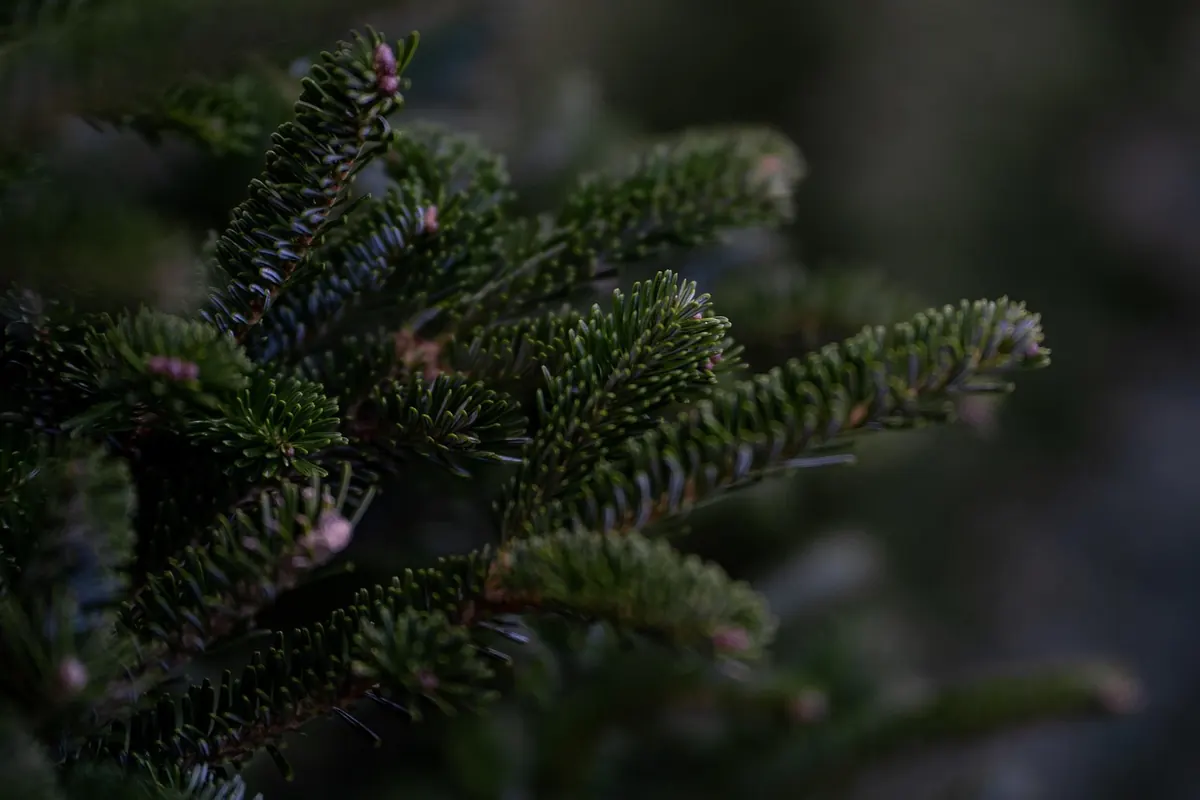
- Conifers. Pine, larch and spruce cones, plus fallen needles, for printing, dyeing and firelighters. Douglas fir cones have distinctive three-pointed bracts that stick out like a mouse's tail.
Identify by More Than One Feature
Leaf shape alone catches people out, especially with young growth and shade leaves, which can look quite unlike the pictures. Build a habit of checking two or three features before you commit.
Leaf arrangement
Most UK trees carry their leaves alternately along the twig. A smaller group — ash, sycamore, field maple, horse chestnut and elder — carries them in opposite pairs. That one question halves your options immediately. For example, ash and elder both have opposite leaves, but elder twigs are soft and pithy, while ash twigs are stout and have sooty black buds.
Buds and twigs
In winter, buds do the work. Ash has sooty black buds in opposite pairs. Beech has long, slim, sharply pointed brown buds. Oak clusters its buds at the twig tip. Lime has small red buds on a noticeably zigzag twig, and alder's buds are purple and stalked.
Bark, scent and setting
Birch is white and peeling, cherry has horizontal lines across the bark, beech stays smooth and grey, and oak develops deep fissures with age. Scent is a useful back-up — some twigs smell distinctly sweet or resinous when scratched — but never rely on it alone. Two features that agree, checked against a decent pocket guide or the Woodland Trust's tree identification pages, is a reasonable standard before anything goes into your craft box.
Berries, Cones and Seeds: Handling Is Not Eating
A tree can be safe to handle and still unsafe to swallow. Hold on to that distinction. Nothing gathered outdoors should go anywhere near your mouth, however appealing it looks.
Rowan berries, hawthorn haws, sloes and holly berries are all fine to handle and useful for dyeing, threading and wreaths. Rosehips are excellent for colour and decoration, though the fine hairs inside the fruit irritate skin and eyes, so wear gloves when splitting them open. Conkers are harmless to touch and lovely for threading and painting, but they are mildly toxic if eaten, so keep them away from dogs and small children.
Acorns and beech mast are also safe to handle and make wonderful threading beads or natural counters. They are not for eating raw — acorns need extensive leaching, and beech mast is best left to the squirrels. Elderberries deserve a note of their own. The cooked berries are used in cordials and dyes, but the raw berries, leaves and stems contain compounds that cause nausea. If you want to work with elder, use the hollow stems for beads and tubes, and wash your hands thoroughly afterwards.
If you are not certain what it is, it stays where it is. No craft project is worth a bad afternoon.
The Trees to Walk Past
Yew is the one to know above all others. Every part except the fleshy red aril around the seed is toxic, and the toxins survive drying and burning. Don't gather it, don't whittle it, don't put it on a fire. Yew can be mistaken for other conifers, but its flat, dark green needles and bright red aril are distinctive.
Laburnum is poisonous in all its parts, seeds included, and its smooth green wood is exactly the sort that tempts a beginner to try a bit of whittling. It has pendulous yellow flowers in spring and shiny black seeds in pods. Never burn yew or laburnum — the toxins become airborne in smoke. Cherry laurel, privet, rhododendron and spindle are also toxic, and all four are common in parks and gardens, where they are easy to pick up by mistake. Mistletoe and ivy berries are best left well alone — both are toxic if swallowed, and ivy sap can cause contact dermatitis in sensitive people.
Tools, Gloves and Good Habits
A few simple habits separate a happy gatherer from a sorry one. Start with a decent pair of gardening gloves — leather palms are best for thorny material like hawthorn and blackthorn. Carry secateurs or a small pruning saw for clean cuts, but remember: never cut from a living tree without the landowner's permission. Fallen wood, windfall and storm debris are fair game on public land, but even then, check local bylaws. A basket or cotton bag lets air circulate and prevents mould; plastic bags trap moisture and turn your harvest into a slimy mess. Finally, always tell someone where you are going and take a phone. A first aid kit with tweezers for splinters is a sensible addition.
- Cut cleanly. A sharp blade makes a clean wound that heals faster, and it is safer for you too.
- Take only what you need. Leave plenty for wildlife and for the tree's own health.
- Avoid busy roads. Roadside trees collect exhaust pollutants, which you don't want on your hands or in your craft box.
- Wash your hands. After any foraging session, wash thoroughly before eating or touching your face.
Seasonal Guide: What to Gather and When
Nature crafts follow the year. Knowing what is ready when helps you plan and reduces the temptation to take things that aren't at their best.
- Spring. Fresh willow rods for weaving, young hazel shoots for simple frames, and fallen blossom for pressing. Avoid taking bark while sap is rising.
- Summer. Lime and sycamore leaves for printing, elderflowers for cordial (if you know your identification), and early cones from larch.
- Autumn. The main harvest: hazelnuts, acorns, beech mast, conkers, rowan berries, haws and sloes. Also the best time for fallen wood for whittling.
- Winter. Bare twigs and buds for identification practice, birch bark from fallen branches, and evergreen foliage like holly and ivy (but remember the berries are toxic).
Photo: 8531425 / Pixabay