
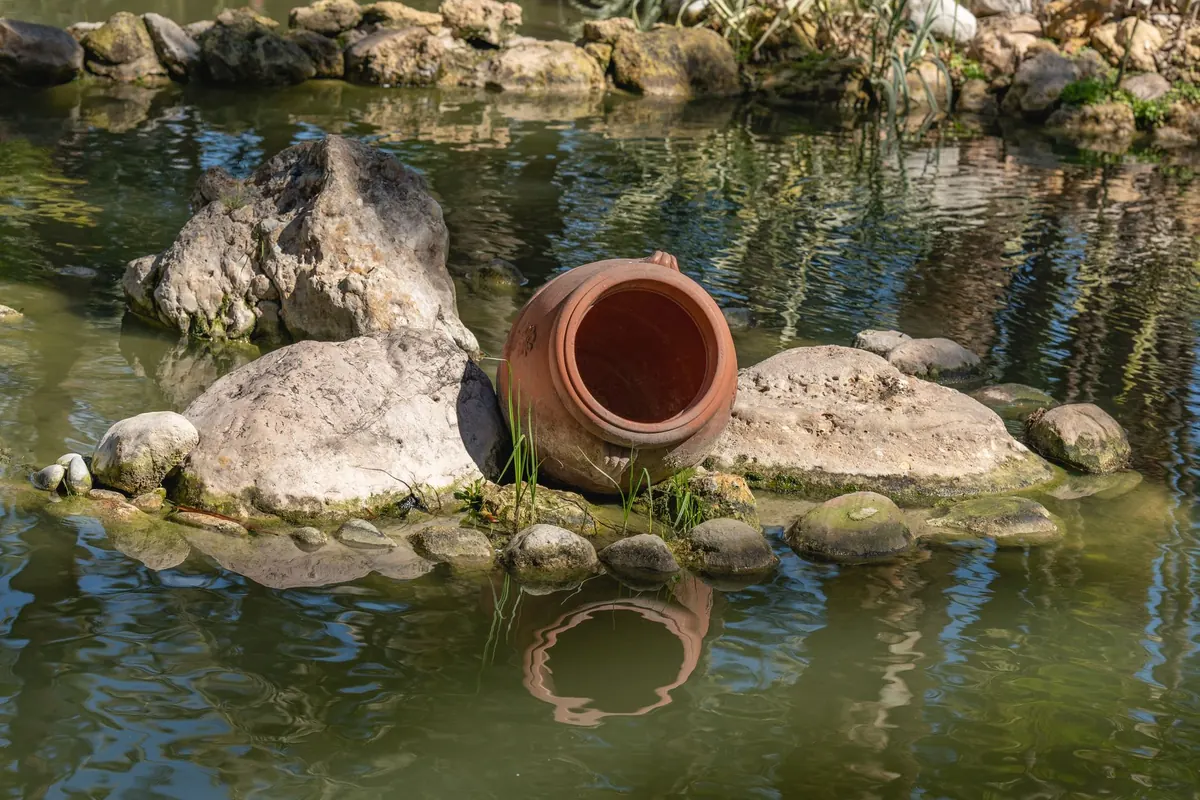
A pond the size of a washing-up bowl sounds like a compromise. In practice it can be the busiest patch of a small garden. Birds drop in to drink and bathe, hoverflies and damselflies patrol the surface, frogs find cover among the stones, and you can watch all of it from a kitchen window. No spade, no liner, no weekend lost to digging. A sturdy container, a few plants and a sunny corner will do.
Why even a small pond earns its place
A garden with water in it behaves differently from one without. Even a modest container holds enough depth for insects to complete their life cycles in, and enough still surface for a bird to bathe safely. Frogs and toads need damp cover and shallow water, so a container pond becomes a stepping stone between the bigger ponds in the neighbourhood, linking up the watery places around it a little at a time.
There is a quieter benefit as well. Water reflects light, moves in the wind and makes a small space feel larger. On a hot afternoon, a planted pot of water cools the air immediately around it.
Choosing the right container
Almost anything watertight will work: a half barrel, a glazed pot, a trug, a stone trough, an old butler sink. The container matters less than its proportions and its condition.
Size and depth
Aim for at least 45cm across and 30–45cm deep. Depth counts for more than width. A deeper container stays cooler in summer and is less likely to freeze solid in winter, which matters if larvae or newts are overwintering near the bottom. A 60cm half barrel is a good target; a 30cm pot will work but needs more attention in a heatwave.
Think about weight before you fall in love with a spot. A filled barrel is far heavier than it looks, so site it first and check the surface underneath — especially on a deck or balcony — can take it.
What to avoid
- Containers that have held oil, paint, weedkiller or fertiliser. Residues can linger for a long time.
- Unglazed terracotta, which can crack in a hard frost. Line it, or choose something frost-proof.
- Narrow-necked jars and bottles. Impossible to plant well, and awkward for wildlife to get in and out of.
- Containers with drainage holes, unless you seal them with silicone or line them with a piece of butyl pond liner.
- Anything you are unsure about. If a metal container worries you, line it before filling.
Siting it well
Most pond plants and most pond wildlife want sun — half a day or more. A spot that catches morning sun and some afternoon shade is ideal, because it warms up early without cooking later. Avoid sitting the container directly under a tree: leaves drop in, roots investigate, and rain drips off the canopy for hours after a shower.
Put it where you will actually see it, near a window, a bench or a path you use daily. And if there are toddlers about, treat any open water with care. A container at waist height with a sturdy mesh grid over the surface keeps a small pond safe to look at; otherwise it can wait a year or two. Older children usually manage perfectly well with a clear rule or two.
Planting in layers
Pond planting is really about three zones. Get one plant from each and you have a working pond.
Submerged. Oxygenators such as hornwort and water starwort live entirely under the surface and help keep the water clear. Hornwort does not root, so a few loose strands are enough to start with.
Marginal. These sit in baskets at the edge, with their crowns just below the waterline: water mint, marsh marigold, lesser spearwort, blue flag iris, flowering rush. They give insects somewhere to climb and birds somewhere to perch.
Floating. A dwarf waterlily suits a barrel beautifully, and frogbit is a good alternative for a smaller pot. Both shade the surface, which slows algae.
Use aquatic compost or a loam-based mix with no added fertiliser, planted in baskets and topped with a layer of gravel. Ordinary multipurpose compost is too rich: it feeds algae and often floats. Plant in late spring or early summer so roots establish before the cold arrives.
One warning worth taking seriously: some aquatic plants are seriously invasive, including floating pennywort, water fern and parrot's feather. Check what you buy, keep vigorous plants in baskets, and never tip pond waste into a stream, ditch or river.
Bringing in the wildlife
Then comes the hard part, which is doing nothing. Do not add fish — in a container they eat everything else and foul the water within weeks. Leave the pond alone and it fills itself. Water boatmen, diving beetles and pond skaters appear within weeks. Damselflies follow. Frogs turn up more often than people expect, especially where there is damp cover nearby.
Do not move frogspawn or tadpoles from another pond, however tempting. Diseases spread easily that way, and a healthy pond will be found without help.
Small details make a real difference to what survives:
- A ramp — a piece of weathered wood or a run of stones from the water to the rim, so hedgehogs, frogs and beetles can climb out.
- A shallow beach of stones breaking the surface, giving birds and insects somewhere to stand and drink.
- A log pile or a patch of long grass within a metre of the container, for cover.
- A floating leaf or a cork on the surface, so bees and other insects that land on the water have somewhere to rest.
- A few dead stems left standing over winter, rather than a tidy autumn cut-back.
Looking after the water through the year
New ponds go green, and this one will. Algae is normal in the first few weeks while the plants are still small, and it usually settles as they grow and shade the surface. Resist chemicals. Barley straw is a traditional, gentle option if the water stays soupy.
Top up with rainwater from a butt rather than the tap. Tap water carries nutrients that feed algae, and in hard-water areas it leaves a scum on the surface. In autumn, net out fallen leaves before they sink; rotting leaves feed algae and use up oxygen. In late spring, thin overcrowded marginals and divide the waterlily if it has filled its basket.
Frost needs care in a small container. Do not smash the ice — the shock waves harm anything in the water. Float a ball, or stand a pan of hot water on the surface to melt a hole. A small pot can simply be moved into a sheltered corner for the coldest weeks.
Start small, then leave it alone
The best first pond is a modest one in a spot you walk past every day. Fill it, plant it in layers, add a ramp and a stone beach, and then be lazy. Do not chase perfect clarity, and do not tidy it into a featureless bowl of water. Give it one full season. By next spring it will look as though it has always been there — and something will be using it every single day.